Monday, July 25, 2011

Russia’s Two Souls: On Andrei Zvyagintsev’s Film “Elena” (2011)


Awarded the Jury’s Special Prize at the Cannes Film Festival this year, Andrei Zvyagintsev’s “Elena” is a powerful cinematic feat, as distinct and subtle as his 2003 prize-winning “The Return,” but one whose story carries a greater resonance and depth. A small masterpiece, it will be appreciated by a thinking audience, one that prefers, on occasion, a bit of a work-out for the little grey cells, rather than have their eyeballs massaged by purveyors of eye candy. Like raw oysters, or Anton Chelhov’s “comedies,”  and unlike MacDonald's Big Mac, Zvyagintsev’s “Elena” calls for an acquired taste, and those who have it will come away feeling satisfied and rewarded.

On the surface, it is a typical human interest story about a conflict between a middle-aged couple, each on his and her second round, who disagree on ways to provide for their children. As in Chekhov, most of the elements of the story are eminently portable and could located in any modern society, and yet, as in Chekhov, they are all eminently Russian, and their particular coordinates of time and space are Russia today.


Zvyagintsev chose to make his film visually spare, muting its color palette to that of the arid late fall in the European North, and shooting most of the film with a  stationary camera, partial to the split focus effect. The overall ambience can best be described as a cross between a subtle Japanese water color and a glossy catalogue photo of a sterile Scandinavian furniture show room. There is a sound track to match. The opening scene in an upscale condo occurs in a sonic vacuum, punctuated by discrete quotidian noises of the morning rituals soon to be drowned in the chilling cheer of morning TV. Before long, this infernal auditory néant morphs into an itch-inducing, quiet-desperation score by Philip Glass. It is not so much against this minimalist buzz, as along with it, that Zvyagintsev unfolds before us his sophisticated moral – and sociological – picture puzzle.


What are the pieces? A good-looking, if a bit heavy-set, tall Russian woman Elena (Nadezhda Markina), in her fifties, a former medical nurse, now married to her ex-patient, a vigorous and apparently successful older businessman, Vladimir (Andrei Smirnov). Well-dressed, if conservatively and a bit on the matronly side, she emanates the aura of a fading Russian beauty: slow and glacial exterior belying, one imagines, the incendiary mix on the inside waiting for a spark. Her husband cuts a figure of a commanding stature: a self-made, no-nonsense top executive, with a taste for Danish furniture design, German motors, membership in a top-notch health club, a roving eye, and a medical cabinet well-stocked with Viagra.


Both have children from their previous lives. Elena has a no-good son Seryozha (Aleksei Rozin), who likes to spit from the high-rise balcony of his non-descript outer suburb housing project, a good-of-nothing high-school senior grandson, who looks up to the “hood’s” petty criminals, another one-year-old to follow in his bother’s footsteps, and yet another  on the way in the fertile belly of her daughter-in-law, a woman in her own image: pragmatic, indulgent,  down-to-earth and, as it turns out, with few moral scruples.

Vladimir’s daughter Katya (Elena Lyadova) is no good either, except that she is harmless. A thoroughly urban, upper-middle-class young woman, she arrives on the scene casually well-dressed and attractive, if a bit fatigued by her strict regimen of “food, sex, drugs, and alcohol only on weekends.” Like Seryozha, who lives off his mother’s pension and other hand-outs, Katya is not gainfully employed, but her indolence, we are led to understand, is the result of self-reflection and moral disgust with the emptiness of her world whereas Seryozha’s is habitual, non-reflective, even vegetative kind of idleness – the torpor of a creature with minimal social skills who cannot exist without his beer-bottle pacifier in his mouth.


Zvyagintsev could not have drawn a starker class line than the one between Vladimir and Elena: one the one side are the cosmopolitan, sophisticated father and daughter, on the other, the Russian meshchanstvo (petty bourgeoisie), a kind of lumpen
bourgeoisie, the blue- or white-color milieu, intensely materialistic and, despite the urban setting, still rooted in the traditional rural culture, with its unquestioned patriarchy, focus on fertility, and limited horizons. Indeed the “intrigue” of the plot revolves precisely around the difference in what economists and sociologists call time horizons of the husband and wife.

Vladimir’s world implies planning ahead and awareness of the cause-and-effect relationship between actions and consequences. Elena’s is the chaotic world in which needs and dangers – as in the case of the military draft for which every Russian eighteen-year-old is eligible – emerge unexpectedly and must be impulsively met and satisfied. Those who wish to avoid or delay the draft can do so by entering an institution of higher learning – either based on their transcript and exams, which requires a long time-horizon, discipline and  planning, or a miracle in the form of a lump sum, sufficiently rounded, to underwrite a bribe.  Where a peasant fearing drought would pray to a patron saint of rain, his latter-day urban descendant, a Seryozha or Elena, scheme for a one-time subsidy from the well-provisioned Vladimir.

Without giving away the story, the film ends with Elena’s family moving into Vladimir’s up-market spacious condo and planning to subdivide it in the same manner that the stately apartments of yore were converted into communal warrens of the Soviet era. The film’s parting shot through the window of the condo replicates the opening shot, amplifying the circular time of the film: “And the wind returneth to its circuits.” The “communal apartment” mentality, perhaps going back to the famous Russian peasant commune, mir, reasserts itself, whether under “socialism” or Russia’s twenty-first century oil-driven “capitalism.” What may otherwise bee seen as a human-interest story begins to resonate as an allegorical tale with particular sociological implications: the deep structure of the Russian tradition turns out to be more powerful than any new-fangled modernities, be they communism or capitalism.

As if to emphasize the allegorical turn of the film narrative, Zvyagintsev sets the film in “Any Metropilis” (anyplace vs. the utopian noplace) of today’s Russia, one with a leafy neighborhood for million-dollar condominiums and the infinite urban sprawl of the housing projects for the less fortunate Russians whose outer reaches require travel by rail. All topographical details that might determine the particular setting have been excised. Zvyagintsev is laying a claim to a myth which can serve as a template for any region of his country. With its pieces fit into place the picture puzzle becomes an allegory, one with a considerable historical depth.


In Russia, to unpack Zvyagintsev’s allegory, the great reforms, whether of Peter the Great, Catherine, Alexander I, Lenin, Stalin, Gorbachev or Yeltsin, sooner or later run out of steam, and the traditional, semi-rural culture of Russia absorbs and swallow up, like a predatory plant or a swamp, whatever “foreign” agency has once disturbed its surface. Elena stands for the traditional, semi-rural, semi-urban  Russia – her taste for kerchiefs and scheming (khitrost) are the tell-tale signs of her peasant wiles. This is the fate that awaits the film’s protagonist Vladimir and his restless off-spring Katya. The victory is Elena’s and her son’s.

With the puzzle complete, the film’s pedigree in Russian literature and its discourse on Russian culture and history becomes more obvious. The film echoes Denis Fonvizin’s classic comedy The Minor (1798), in which the mother’s protective love for her son and her inability to enforce discipline destroys his career prospects, to Goncharov’s novel Oblomov (1859) in which the Westernized Russian protagonist ultimately regresses into the embrace of an indulgent “Elena,” to Isaac Babel’s “Tale About a Peasant Wench” (1917) in which the ever-fertile peasant whore Arina smothers the angel Alfredik who had been sent by the Almighty to redeem her sins.

A hundred years ago, as Russia entered WWI, Maxim Gorky elaborated this view of Russian history in his controversial essay “Two Souls” (1915). "We, Russians, have two souls," he wrote, "one descends from the Mongol nomad, a dreamer, a mystic, indolent and convinced that it is impossible to challenge fate; and right next to this impotent soul, lives the soul of a Slav; it may ignite a beautiful bright flame but it burns itself out quickly, and it is helpless against the poisons sapping its strength." However dated Gorky's "Two Souls" may bethe film maker Zvyagintsev challenges our understanding of today’s Russia by reviving Gorky’s harsh take on some of Russia's ingrained cultural patterns. 

Choosing to call his film “Elena,” not “Vladimir,” Zvyagintsev accents his vision of the county, telling us which one of  the “two souls” is on the ascendant in Russia today. 


Copyright © by gfreidin@stanford.edu 2011


Monday, April 18, 2011

Target, the Movie (Alexander Zeldovich and Vladimir Sorokin)

March 25. Berkeley


I saw The Target (Мишень) two nights ago (dir. Alxander Zeldovich, script by Alexander Zeldovich and Vladimir Sorokin. Ren Film, 2011). My friend Tom Luddy was kind enough to lend me a copy after he returned from the Berlin Film Festival where the The Target premiered.


The Target may be strong stuff for some but, I am not among them. For me, this is a visually grating (on purpose, of course) art-house film. Thought provoking? Yes, by the ton, and here is what it has provoked me into thinking.


I understand Vladimir Sorokin's thing, which Zeldovich chose to explore cinematically. It is to puncture the romantic illusion, whether the "good, true, and beautiful" of the 19th-cetury intelligentsia ideology or its later incarnations in socialist realism, and post-Stalin critical art and fiction (say, Solzhenitsyn). But if what you aim at is art, you cannot actually destroy illusion, because in art, illusion is indispensable. What ultimately happens when you try to do away with illusion is that you either stop producing art and have an analytical critique instead, or you simply replace one illusion with another, most likely, the opposite of your original target (pun intended). 

Let's consider the first possibility: The Target is a kind of an allegorical analysis of the human condition in the hydrocarbon-dependent and criminally corrupt Russia of the not-so-distant future. Those deluxe Russians, who have risen to the top of the pyramid and who think they are smart, beautiful and (this is the sci-fi twist, the dystopian part) entitled to eternal youth, are, in fact, ugly, stupid, and have a remarkable short life-expectancy. The sex scenes are abundant, in-your-face graphic, and telling - less fun to watch than a barn yard romance. 
They are Sorokin's version of an old school Russian literature teacher's question to an eighth-grade cretin.


The dialogue goes something like this: 
Tell me, Volodya, did Onegin really love Tatyana? 
Like, teach, I haven't like finished the book yet but I think he like just wanna hump her, you know, like a dog, like from behind...

What these Russian creatures call love, Sorokin and Zeldovich seem to be saying to us, is nothing but an animal urge, not even to procreate, though the central couple (an oil minister "Karenin" and his bored wife "Anna") are trying to conceive - need I say, unsuccessfully - but to dominate, to crush your partner. 

OK. We get the allegory: Putin's or Putin-Medvedev's Russia is nothing but a criminally corrupt enterprise that has no future or, rather, one like the present only slicker and bleaker than today. One of the male characters, played by Vitaly Kishchenko is a sex maniac mafioso and a biker (a "Vronsky" stud type), who looks suspiciously like Putin, especially as he rides his futuristic cruising bike or is transported to his death after his criminal enterprise crashes. 
Kishchenko and Zeldovich
To add a bit of complexity, the framing message is that USA is nowhere to be seen and the dominant cultural and everything else power is - you guessed it - China. There is an occasional Chinese face but, for the most part, the them is felt through Leonid Desyatnikov's minimalist score, with a bit of a Chinese musical lilt grafted onto it. A lot of people hold similar views, and as they watch this film, I imagine while checking email on their iphones, they may nod approvingly to having their thinking confirmed by the flickering screen.

But if we consider the second possibility, namely, that Zeldovich and Sorokin tried to make an art film (emphasis on art), then the result is a bust. What Target offers is an inverted romantic illusion. In our post-everything age, this means they are preaching to the converted. Indeed, it would be easier to find a snow ball in Hollywood than a potential member of the Target audience who considers the romantic illusion to be true (in a way that, say "money makes the world go round" is true).


My educated guess is that most people, nevertheless, find romance and romantic illusion pleasing. We like romance in the same way that the people who do not believe in Santa find Christmas trees pleasing. Ditto sex. We all know that sex, when seen by an uninvolved spectator, looks ugly - ugly enough, as Freud pointed out at length in The Wolfman, to traumatize a child for life (a Russian child no less!). But most would agree, our voyeuristic inclinations aside, that "doing it" is another matter. This is why the film's dis-illusion,  its attempt at disenchanting the magic of romance, makes for an unsuccessful artistic illusion. We already know: (1) "sex is ugly" and (2) life is ugly, too, not to mention brutish, short, and solitary. The author of Anna Karenina thought so following Hobbes, except unlike Hobbs, he thought that it was the state, not nature, that "made us do it." 
The art historian Ernst Gombrich once quipped that in engaging with art one can either immerse oneself in an the illusion induced by a work of art or subject it to a rational analysis; but it was impossible to "watch oneself having an illusion." The film Target by Zeldovich and Sorokin invite us to watch ourselves being disabused of the illusion that we do not have. 

And yet, the film is worth seeing. I was taken by a few scenes  that experts with a taste for Sots-Art, the post-modern legacy of the Stalinist aesthetic, may find amusing enough to endure the rest of the feature. The shots of the over-the-top affluence of the nouveau Russian country estates evokes the canvases extolling the abundance of Stalin's collective farms and the corresponding Stalinist celluloids. And the village that specializes in selling rejuvenation and life eternal looks suspiciously like Brat's native realm. So, there are a few worthy nuggets in dem da hills, even if it takes a bit of sweating and digging to get to them. A juxtaposition of another political heavy hitter, Balabanov's Cargo 200, and Target would make for an interesting essay (Balabanov's Putin-like biker Alexey Poluyan v Zeldovich's Putin-like biker Kishchenko)... As would juxtapositions of the film adaptations of the greatest nihilistic novel of all times, Oprah's favorite "Anna Karenina." I may actually show Target in class next year when I teach the novel.


PS. 9/5/11. Target has just been screened at the Telluride Film Festival. The NYT critic A.O. Scott called it "an astonishing piece of visionary futurism" and one that caused him to experience "sublime puzzlement." I hope this billing will elicit in some American distributors an equally sublime desire to show Target in the US. 


PPS. September 27, 2011. The film will be shown at Stanford, with a round table discussion to follow on November 10 at 6 pm (venue TBD). Discussants: Alexander Zeldovich, Vladimir Sorokin, Gregory Freidin (Professor of Slavic Languages and Literatures, Stanford), and Tom Luddy (Director, Telluride Film Festival).


Friday, April 15, 2011

HOW THE WORLD HAS CHANGED: FROM ISAAC BABEL TO MILDRED PIERCE

I am writing a book about a Russian Jewish writer, Isaac Babel, who thought that art could serve as the solid inner core of one’s identity, that the power of art is sufficient to redeem violence, revolution, and all possible human transgressions against morality, faith, loyalty, and plain human empathy.
This attitude was rather typical for the generation of avant-garde artists to which he belonged, men and women who had gained renown as poets, writers, painters before the 1917 Revolution but whose career matured in the Soviet era. Although in a less extreme form, intellectuals both in Russia and the West, myself included, carry the vestiges of this attitude or, rather, faith.

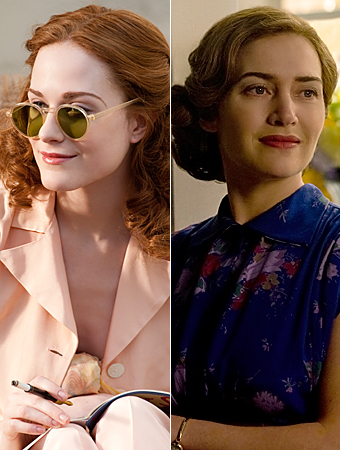
My self-imposed biographer’s immersion in this mind-set made it all the more interesting for me to see, if only for the late-night relaxation, the latest HBO mini-series, “Mildred Pierce,” a high-class soap about an American woman in the 1930’s Los Angeles, modeled to a degree on the 1945 eponymous film with Joan Crawford in the lead role.  Although it uses the trappings of the Great Depression America, Director Todd Haynes’ “Mildred Pierce” tells us a story about the American dream as it tumbled down from the summit irrational exuberance to its low in the Great Recession, walking-wounded, self-medicating U.S.A. of our own day.
Played by Kate Winslet, Mildred is a strong woman from Glendale and a “straight shooter” in all matters, except two things that thicken the plot: her guilt-ridden relationship with her daughter and her occasional indulgence in good sex, per HBO conventions, with Monty, a playboy character of Guy Pearce. After her double-timing husband of eleven years walks out on her, this suburban housewife picks up the pieces and eventually succeeds by turning her home-spun passion for pies into a lucrative chain of pie shops and restaurants.

In the soap opera tradition, things get really bad, then they get really good only to get really-really bad before a reversal so spectacular that it could only be followed by an all-out crash which, in deference to the conventions of a melodrama, touched by a refreshing brush of the noir, leads to a partial and not entirely satisfactory rescue.

Melodramas are a bourgeois genre, one that arose at the time when the bourgeoisie was vying for supremacy with the aristocracy. The secret of success of those who belonged to this rising class lay in their ability to take advantage of a chance opportunity offered the dynamic society and economy of their time, and melodrama, the TV series of its time, was meant to teach a moral lesson. Melodramas are different from tragedies in that they promise a good life if the characters mend their ways – something that tragedies, and their cinematic noir equivalents do not. To give an example, “Law and Order,” a deeply noir TV series, begin with a wolf’s  howl and ends its story on a note of a howling poetic injustice, as in a tragedy, with the final shot of a black screen with the two monosyllables of the series producer’s name, Dick Wolf. Subliminally they rhyme with the archetypal monosyllabic coupling of “fuck you,” each word pronounced emphatically, a condensed and effective diagnosis of the human condition seen through a tragic or film noir prism.

“Mildred Pierce,” its two extra syllables notwithstanding, resonates with the noir genre but only up to a point. On the whole, it stays within the boundaries of the melodrama, and as such, delivers a moral message. It is the singularity of this moral message, suggestive perhaps of a change in the cultural Zeitgheist,  that has prompted me to put these few thoughts on paper.

The first such message is that good – beach-house throw-all-caution-to-the-wind – sex  and sex and sex is not only overrated but is well-nigh lethal, especially, for a mother of a small girl. While Mildred is enjoying herself with Monty, her younger daughter is suddenly hospitalized with pneumonia and dies soon after her sexually sated mom arrives at the hospital. Good sex, including cunnilingus performed by Monty later on as the two resume their relationship, is also bad for business as it clouds Mildred’s judgment condemning her eventually to a financial and emotional doom.

The second moral message should give pause to the ambitious middle-class parents who instill in their children a desire to transcend the boundary of their class. Herself upwardly mobile off-spring of a garage mechanic, Mildred programs her daughter – with music lessons, concerts, inspirational tunes, and constant subliminal messaging – to aspire to an upper-class status. The result is a young woman who has no respect for the ingenuity and effort her mother invested in the well-being of her family and utter contempt for the middle-class virtues of modesty, chastity, thrift, work ethic, and the like.

Finally, saving best for last, the series deals a shattering blow to the middle-class faith in the redemptive power of art. Vida Pierce, Mildred’s wayward and estranged daughter, is suddenly discovered to possess the rare gift of a coloratura soprano and without, it seems, much effort makes a spectacular singing career (there is no hint of this story line in the 1945 film). Vida’s coach and conductor, an Italian maestro from the old world, tries to disabuse the naïve American Mildred of her belief that Vida’s great artistry has redeemed her daughter’s meanness and would make it possible for them to reconcile. As the maestro puts it in his Hollywood Italian accent, Vida is an attractively colored “poisonous snake,” a creature to be admired as an exhibit in a zoo but under no circumstances to be taken home.

Alas, this old-world, European wisdom, falls on deaf ears (as it did in Europe among those who could not believe that the heirs to Goethe and Beethoven would preside over mass exterminations). A reconciliation between mother and daughter follows soon thereafter. It crests in the LA Philharmonic, all gold, brocade and red velvet, the bourgeois equivalent of a royal court, that the bourgeoisie so much dreams about. Gilding the lily, Vida delivers a performance of a lifetime, including singing her mother’s lullaby as an encore. Mildred is smitten and proceeds to take the poisonous snake home.

Now Mildred is set up to lose it all, and she proceeds to do so with dispatch. Soon after her investors confront her and threatened with bankruptcy unless she recovers the  corporate money she had showered on Vida. She rushes to her home, no longer in the prosaic Glendale but in the high-flying Pasadena of her new husband Monty, and discovers Vida, yes, in Monty’s bed.
Melodramas cannot end on a tragic note, and in the final segment Mildred picks up the pieces again, not all of them by a long shot, but enough to stand on her feet, remarry her first husband, and yet again send her daughter packing. The last frame shows her and her husband, disenchanted at last, self-medicating their pain with hard drink.
That love, even mother’s love, not to mention sex, turns out to be a dangerous illusion and a trap is a melodramatic message even older than Jane Austen. But to be using the same brush to tar both the aspirations for upward mobility and high art turns a new page in the annals of bourgeois drama. The director Michael Curtiz, it seems, tells his viewers to forget about upward mobility and not worry much about the lack of support for the arts as they do not contribute to the moral betterment of society, perhaps, even lead to the opposite result.

He is right, of course, in decoupling beauty from truth and justice but I would rather stay with Isaac Babel and be wrong than be right in Director Curtiz’s conventional middle-class Glendale box without even an illusion of an exit, except through the neck of a liquor bottle.


Thursday, February 3, 2011

Bee's Knees: Retirement, Leo Tolstoy, and the Consolation of Social Physiology

Leon Gerome Ferris. The Mayflower compact. 1899
A stirring passage about bees has been buzzing in my brain since I gleaned it at breakfast on Tuesday. The source is May Berenbaum’s review of two books about the social organization of ants and bees (TLS, 1.28.2011). Apparently, the big deal in the world of bees and, by analogy, among us, humans,  is when an over­populated hive spawns a colonizing  swarm of bees. The swarm is formed by the bees who have decided to strike out on their own; they leave as a swarm in search of a site to establish their new bee colony (think Mayflower).

As this swarm dangles form some tree limb, its special scout bees check out the adjacent territory. When they return, they communicate their finding to the swarm in a special dance. Here’s the passage that has been "buzzing" in my head since morning:

One point Seeley makes in his book is that scouts never blindly copy each other; each scout dances only to promote a site that she has inspected herself. Moreover, the intensity of promoting the site naturally decays over time – and individual scout will advocate for a site only for a limited amount of time and then will retire and rest. Both of these behaviours minimize the perpetuation of errors.

A swarm has left from a beehive and was standing on the branch of a tree.
What stung me was the precision with which this pattern fits what I know about the creative types among us humans. Pindar once likened the poet, who gathers inspiration from other poets, to a bee collecting pollen from different flowers to make his own honey ("Persephone's bees" of Osip Mandelstam). Leo Tolstoy, too, knew a thing or two about bees,. There is an ironic, down-to-earth echo of the Pindaric simile in Tolstoy's put-down of scholars: people who copy passages from many books by other authors into one notebook and then publish it as their own volume of scholarship. Apparently what Pindar admired Tolstoy put down in his always riveting, if nihilistic, dance. Of course, his own dance would have been impossible without his predecessors, and he knew it. Just think of his combining the French adultory novel and its opposite, English family novel into one Anna Karenina.

L.N. Tolstoy. Self-portrait. Photo. 1862. Collage by the author. 2011.
This impressive pedigree of the analogy between the bees and the humans notwithstanding, Seeley’s description rings louder and deeper still.

How many scout bees do you know among your friends, how many times have you seen them dance their unique dance to promote a new site for our hive thought to colonize that they discovered in their imagination? How much you admire their intensity only to register with sadness that it lasted “only for a limited amount of time” - before they, too, shuffled off to “retire and rest.” Apparently, not everything is lost! What a comfort it is to realize that there is a higher purpose to all of this odd and, in the light of common, practical wisdom, thankless behavior!

So next time your inspiration makes you think of yourself as bee's knees and you throw yourself into a dance, do not despair if your immediate audience is not moved. Even as your inner conviction decays over time and you "retire and rest" in fatigue and disappointment, be assured: you have made a contribution by putting a small dent in our species' perpetuation of errors


Tuesday, February 1, 2011

Girls on Tanks or Twenty Years later

Twenty years ago in Moscow, especially at night, when the city's daytime roar turned to a steady rumble, I thought I could sense the earth's axis turning. Yes, yes, I know what was happening in Russia was not an isolated event. Solidarity had already triumphed in Poland, the Berlin Wall had been breached, and the US had won the cold war. Still, it was the fall of communism in Moscow -- the capital of the country where the "real twentieth century" began back in 1917 -- that carried enough political and symbolic weight to tilt the world's axis towards the new century. And so they began to sway and tumble down - the entrenched authoritarian modernizing regimes, the "old regimes" of the waning century. Not all of them and certainly not all at once, but by now, the trend is palpable.

Notwithstanding the differences, there is, then, a kinship between what is going on in Cairo today and happened in Moscow in August 1991. With the hindsight of Russia's experience over the last two decades, we can expect more similarities in the future. But for the moment, one can rejoice at the anticipated fall of Egypt's last Pharaoh.


Nothing suggests the deep similarity between the two revolutions better than the photos my daughter Anna emailed to me today, with the subject heading "When you know a regime has fallen..." One of the two, with little Anna on the tank, was taken by me on 21 August 1991 in Moscow, the other, of an Egyptian girl, by someone in Cairo today or yesterday. Guess which is which...

Do you sense the tilt, as the world keeps tumbling into the future?

2.1.2011

Wednesday, January 26, 2011

“A Bitter Taste of Freedom” - How Sweet It Is!

Thanks to my friend Tom Luddy, the Director of the Telluride Film Festival, I had a pleasant surprise waiting for me in my mailbox on Sunday afternoon, “A Bitter Taste of Freedom” (2011), a cinematic biographical tribute to and about Anna Politkovskaya. The film was directed and, in part, shot by a much acclaimed Russian documentary film maker, Marina Goldovskaya, who had known and interviewed her subject personally. But it is not so much Anna Politkovskaya (much has been written about her) as the film itself that I am most interested in thinking about.

As we all know, a biographical tribute, documentary or otherwise, is always a mythology, because the materials are both selected and organized by the author—who always keeps one eye on the present, the moment that is shaped, among other things, by the outlook and interests of the author, whether they are acknowledged or not. "A Bitter Taste of Freedom" is no different in this respect from any other work of this kind. Two ostensibly historical lines frame its film narrative. One is Russia’s passage from perestroika to the fall of communism and, eventually, the Chechen war and the Putin presidency; the other is a personal story of Politkovskaya, her student years, her happy marriage to a man who became the center of the most daring and entertaining TV news program in the perestroika years, their eventual estrangement, divorce, and her professional rise in the late 1990s as an investigative journalist working for one of the few remaining independent news outlets, Novaya gazeta. Inside this frame is the strong and attractive, not to say beautiful, face of Anna Politkovskaya.

In a nutshell, “A Bitter Taste of Freedom” is a hagiography of a latter-day Russian martyr and, perhaps, a holy woman, and perhaps, even a saint. The voice over tells us more than once that the Chechen women – whose loved ones had been killed, tortured, or kidnapped by the Russian forces, and whose cause Politkovskaya fearlessly publicized ­– prayed to her.  Goldovskaya shows masterfully – and here she really hits the mark – what a charismatic person is about: intense and radiant with the sense of purpose and rectitude, wholly dedicated to her cause, and perhaps most important, vibrating with the sense of vocation. Charisma of course is the name of a type of social bond existing between the charismatic person and her followers, and Goldovskaya never tires of showing the worshipful admiration with which the Chechen women and others treated Politkovskaya. As a study in charismatic reporting, although it may not have been intended as such, the documentary wins high marks and will be worth studying in schools of journalism. 

There is also plenty of good footage from the 1980s to the present, along with a series of interviews of Anna Politkovskaya that the film maker had recorded over a course of several years (among them, a lot of close-ups of Politkovskaya being interviewed in her bathrobe in her hotel in LA, just before she rushed to Moscow to participate in negotiations with the terrorists who had seized a Moscow theatre).

Unintentionally, though, and most interesting for this writer, the film provides plenty of food for thought about the way that members of Russian intelligentsia, including Goldovskaya herself, look at the world through the prism of victimization: innocent victims of evil power who are redeemed symbolically in the acts and above all, death of a martyr-intercessor. There are other “habits of thought,” all too familiar to the students of Russian culture and society, for example, that Moscow equals Russia.  There is a long shot of the Moscow 1990 or 1991 march along Gorky Street meant to illustrate the real freedom enjoyed by Russian citizens that has now been lost under Putin. The sad truth is that Moscow, more exactly, the center of Moscow, is not Russia. I was in Moscow in the heady days of the August 1991 Putsch, and I remember being shocked by the routine normalcy of life just outside the small perimeter around the White House, not to mention outside Moscow or in other parts of the vast USSR, save St. Petersburg. This is probably the hardest truth for the Moscow intelligentsia elite to swallow (and has been for over a hundred and fifty years, at least since Alexander Herzen's acute observation on the subject, once he found himself in exile in provincial Russia). 

The context provided by the film leads the viewer into believing that it was by sheer transcendence that Politkovskaya managed to stand up to the Russian Leviathan. These intelligentsia elite optics cast Politkovskaya into a giant herself while Putin awkward explanation  (the unforgiving footage of his press conference in Prague) that the Kremlin had no rational motive for killing Politkovskaya, because her activities “had very little impact on Russian politics” begins to sound like a denial of a self-evident fact of Politkovskaya’s importance and, by an unspoken implication, of Putin’s complicity. Putin, of course, as well as those who might wish to please him by assassinating the Kremlin gadfly, the FSB, the Chechen Supremo Akhmad Kadyrov and his minions, have been mentioned in the press as possible conspirators. By the same token, though, their opponents had as much to gain from the assassination by embarrassing the authorities and showing how helpless these strongmen really were. Goldovskaya seems to be pointing her finger, though never explicitly, at Putin and nobody else. To the extent that Putin is where the proverbial buck stops, she has a point (for Politkovskaya, too, Putin was the ultimate evil genius) but given the fact that, pace Wikileaks, only 40% of Putin’s orders are ever followed up, it would have been only appropriate to mention other possibilities. 

What is, perhaps, most puzzling about the film is its actual voiding of history in favor of myth in its presentation of the turmoil in Chechnya, the main focus of Politkovskaya’s investigative journalism and, ipso facto, the documentary itself.  There is no mention that Yeltsin decision to send troops to Chechnya, however ill-fated, was a response to the civil war raging in Chechnya, de jure still under Russia's jurisdiction, in which Chechens had been killing Chechens and the central government had lost all control 1991-1994. Nor is there a single word about the apartment building bombings in Moscow in 1999 (and elsewhere) that preceded Putin's notorious "we'll look for the terrorists everywhere and we'll rub them out, and if we find them in the toilet, we'll rub them out in the toilet." Nor will anyone watching this film have any idea that Chechnya enjoyed a virtual independence in 1994-1999, with no central government presence in the republic itself, until Shamil Basayev (who had just resigned as Prime Minister of Chechnya), along with his Jordanian jihadist confrere Al-Khattab, led their Islamic International Peacekeeping Brigade <sic> into the neighboring Dagestan - de jure and de facto, part of the Russian Federation. In response to this act of aggression, Putin and Yeltsin, then still President, sent Russian forces back into Chechnya, beginning what is known as the Second Chechen War (1999-2006).

The brutality and atrocities perpetrated by the Russian troops in Chechnya are, of course, well-documented by human rights groups, journalists, foremost among them Anna Politkovskaya. But watching this film, you will learn little about the forces on the other side – those who chose violence, unleashing what is now a decade-long civil war in North Caucasus, whether in the name of independence of Chechnya or the establishment of the Caucasus Emirate, or joining the fight for the restoration of the Islamic Caliphate. What we see in the film are Chechen women weeping, mourning, pleading – and praying to their only savior Anna Politkovskaya. Even the seizure of a crowded Moscow theater (Nord-Ost) by a group of Chechen terrorists in 2002 that resulted in the death of one hundred and thirty  hostages, largely because of a botched rescue, is placed by the director at the feet of Vladimir Putin. True, he had apparently overseen the rescue himself and must bear the responsibility for his mistakes, but surely the blame should be with the terrorists, who threatened to blow up the theater and its nine hundred hostages and probably would have, had it not been for the rescue, botched or otherwise. For Goldovskaya, it seems, there is but one source of evil.

The film sounds a tragic note: a brilliant, fearless reporter, who took on a whole state establishment, is gunned down in the prime of her life. Paradoxically, though, it is this tragic note that sounds false, because in the end, “A Bitter Taste of Freedom” is a feel-good documentary: good people are on this, our side, the side of the good; the evil are on the other. Politkovskaya herself knew better:

 <…> all of us are responsible for what has been going on [in Russia]. The responsibility is ours above all, not Putin's. Our “kitchen” reaction to Putin (grumble about him over the kitchen table) and his cynical profanation of Russia – this is what made it possible for Putin to do what he had done to the country in the last four years. Political apathy shown by society is bottomless, and it is this apathy that has given Putin the pass to continue for four more years <treating the Russian people> like cattle…

(Putin’s Russia: Life in a Failing Democracy (2007); translation is mine from the Russian original)

Copyright © 2011 by gfreidin@stanford.edu

Thursday, December 30, 2010

Russia: A Very Brief History

- To see the newer version, updated in 2018, click here

Some time in the late 1990s, I was asked by Encyclopaedia Britannica to produce a short piece condensing the history of Russia into 300 words. As I recall, the idea was to fit the text onto one screen for some reference service having to do with the 2000 Olympics in Australia. I liked the challenge and struggled with it for a couple of weeks, in the end surprising myself that once things were distilled to an essence, communism got barely a mention. A colleague has just asked me for a permission to use it in a course, and I decided to give the 300 words original a once-over, padding it to about 500 words. Here, then, is my short course in Russian history, revised for the present.

* * *

Situated on the great Eurasian plane, Russia has been vulnerable to invasions from both East and West (Mongols, 1247-1480; Poles, 1605-1610; French, 1812; Germans, 1941). By the same token, once a centralized autocratic state was established under the grand princes of Muscovy, beginning with Ivan III (1462-1505), Russia could expand laterally and hold contiguous territories,. Even today, after the dissolution of the USSR in 1991 and the secession of Ukraine, Belorus, the Baltic republics and those of Central Asia, Russia still spans the entire northern part of the Eurasian continent, from the Pacific to the Baltic Sea.

Adoption of Orthodox Christianity from Byzantium (988) brought Russia into the fold of Christian Europe, but it also set it apart from the Roman Catholic West. Therein lies the beginning of Russia’s ambivalence toward the West and the recurrent belief in Russia’s special destiny as the bearer of true faith, whether Orthodox Christianity (“Moscow the Third Rome”), or the Slavic commonwealth imagined by the Slavophiles, or revolutionary socialism preached by radical Westernizers, or world Communism inaugurated by the Bolshevik revolution of 1917.

Isolated and fractured under the Mongol dominion and later threatened by the increasingly aggressive West, Russia was barely touched by the Renaissance, Reformation and Counter-Reformation, and its own Russian Orthodox Church was never free from the tutelage of the state and is to this day unreformed. Westernization came with Russia’s emergence on the world stage under Peter the Great (1682-1725). A modernizing autocrat, Peter established a lasting pattern for meeting the challenge of the West – maintaining an unstable balance between, on the one hand, selective adoption of modern Western institutions and knowledge and, on the other, protection of the centralized state and its power to impose corvée, heavy taxes, and to repress dissent.

Where the reforms were successful, achievements have been spectacular: in literature (Pushkin, Gogol, Tolstoy, Dostoevsky, Chekhov), music (Chaikovsky, Stravinsky, Shostakovich), art (Kandinsky, Malevich), theater and ballet (Stanislavsky, Meyerhold, the Ballets Russes), film (Eisenstein), science (Mendeleev, Pavlov, Kapitsa), hi-tech weaponry and space technology (the Bomb, the Sputnik). Russia was recognized as a military superpower when it defeated Napoleon in 1812 and under the Soviets when it vanquished Nazi Germany in 1945. It still enjoys a superpower status, if only in nuclear weapons. But serfdom was abolished only in 1861, private ownership of land and property rights are still subject to the whim of the state; civil society is thwarted by the officialdom; and corruption is unchecked.

Deep antagonism between modernizing trends, including the rule of law, and concentration of power at the top — be it a tsar or a communist dictatorship (1917-1991), or Vladimir Putin’s “sovereign democracy” — has produced an unstable and skittish polity. Periods of repression (notably extreme under Stalin) are punctuated by episodes of exuberant liberation, followed by reforms, in turn, undermined by renewed centralization and authoritarian tendencies.

Emancipated from communism in 1991, Russia has been struggling to institute democracy and a market economy in the face of countervailing trends, among them, Muslim irredentism in the Caucasus, endemic corruption, and backsliding into authoritarianism on the part of the power elite. Much progress has been achieved but the overall picture remains mixed, with the exception of Russia’s foreign policy. Since the end of the cold war, Russia has enjoyed an international climate, especially vis-à-vis the West, which is benign without precedent.


Copyright © 2010 by Gregory Freidin

Wednesday, December 29, 2010

Akhmadulina Remembered, Again

Please read the earlier post first.


A few days ago I received a request to review an advance copy of An Invisible Rope: A Portrait of Czeslaw Milosz, edited by my friend and Stanford colleague Cynthia L. Haven (Ohio University Press, to be released shortly). Among other recollections of Milosz (he left an indelible mark in those hwo knew him), there was “Spring in Berkeley,” by Tomas Venclova. It contains Venclova's account of the same evening that he and I spent with Bella Akhmadulina and her husband, as it turns out, at Cheshire Cat, a Berkeley pub that is no longer in existence. Having read Tomas' recollections, I now realize that I must have left the party shortly after Milosz joined it and, fool that I am, missed the rest of the conversation that, unbeknownst to me,  continued well into the small hours of the morning. 


I shall not attempt to retell Venclova's story here and preempt the publications (it is a great piece about Milosz and a fine snapshot of Berkeley, as seen by one who has just landed ffrom Mars!), except to note that among the subjects discussed by these three poets was one dear to Milosz’s heart and at the core of his The Captive Mind: the compromising position of intellectuals who publicly cooperate with a communist regime while limiting their criticism to private consumption (what Milosz referred to as ketman). Tomas, who had freed himself from any ambiguity vis-à-vis the Soviet regime by joining the Helsinki Group, which led to his de facto expulsion, was the one to raise the subject. Akhmadulina, still on the leash, took the subject personally, assuming that ketman had something to do with the ambiguity of her position in the Soviet Union. Milosz, it seems, did too. Akhmadulina was about to go to pieces and would have there and then had Milosz not intervened and absolved her of any such sins after she declared her admiration for Solzhenitsyn’s Gulag Archipelago.
Those were the days! Or as Osip Mandelstam put it in his 1916 poem about a Petrograd performance of Racine's Phaedre, "if only the Greeks could see our games!" Когда бы грек увидел наши игры!

Sunday, December 12, 2010

Remembering Bella Akhmadulina

News flashed the other day the death of Russian poet Bella Akhmadulina at the age of seventy-three. Growing up in Moscow, I remember her name cropping up among the poets who occupied the grey zone between the permitted and the impermissible: she could publish some of her poetry, the other, her muse’s contraband, she could voice at public recitals and enjoy its circulation in literary samizdat. That’s how most Russian intelligentsia lived then – in two worlds at the same time – call it schizophrenia or split personality, or double-think. A true poet, she embodied her age, warts and all, and the decades after Stalin’s death were nothing if not the age of poetry.

Inflected and melodically variable, the Russian language gives poetry an extra ordinary expressive force, further amplified by poetry’s mnemonic potential. If you happen to live under a repressive ideocracy like the Soviet Union, you are likely to resort to poetry as a preferred medium of public expression, since verse is easily memorized, harder to pin down as protest, and leaves little material evidence. Of course, mass terror under Stalin left little room for such niceties, but once Stalin died and the Soviet party-state abandoned mass repression, things changed, and poetry, for one, could really thrive.

The state-controlled publishing could not contain the burgeoning youth culture of Soviet baby boomers, and the minimal – and for that reason infinitely titillating – lifting of the skirt of Soviet censorship, rather than satisfy, only whetted the appetite for free expression. For us, who belonged the post-WWII generation, shaped by Nikita Khrushchev’s Stalinization campaign, cold war, and its other, “peaceful coexistence” (a grudging admission of the impossibility of the “last and decisive battle” against capitalism), this toying with the ideological hemline wreaked havoc with our imagination and set our minds on fire! Grim and sclerotic as the Soviet empire was in its decline, it became a Garden of Eden for poetry – and a purgatory, not to say a minor inferno, for the poets themselves. Some, like Brodsky, were exiled or jailed, others went through torments of hell in trying to combine the imperative of remaining true to their calling with the relentless and crushing pressure to conform. That was the cup that Akhmadulina, twenty and otherworldly beautiful in 1956, drank to the dregs.

In the sixties, I was too green and too much of a young snob to take seriously the poetry of my older contemporaries. Joseph Brodsky was the sole exception, but then, he never published in Soviet press, had gone through a crucible of a trial, incarceration in a mental hospital, and exile up north. Besides, the word had it that Anna Akhmatova herself bestowed the mantle of the Silver Age Heir Apparent on Brodsky’s shoulders. She knew a thing or two about legends, and remarked with her usual sardonic sense of humor about Brodsly’s persecutors: “Oh what a biography they are creating for Joseph!”

Akhmadulina, suffer as she did, could not come close: her poetry was permitted and not, pace Osip Mandelstam bequest, "stolen air." True, she had a front seat in “the little orchestra of Hope, conducted by Love,” as the chansonier Bulat Okudzhava described the true poets of his generation (they may have lost faith but still could love and hope). But for me and my Bohemian milieu, the world of poetry was dominated, not by orchestras, not even the much admired chamber orchestras (Rudolf Barshai and Adrei Volkonsky) but by the great solo players of the Silver Age. Tsveateva, Mandelstam, Akhmatova, Pasternak, Mayakovsky (grudgingly), each had an oversize and fulfilled destiny and each was wrapped in a personal myth capable of enchanting their “grandchildren’s” generation. And that is who we were. Just think, we used to joke, Akhmadulina shared only two syllables with the regal Anna Akhmatova. Two syllables did not cut it.

But then, not long before my emigration from Russia, I had the occasion to change my mind. The transformation occurred in a Moscow theater while I was watching a hybrid feature film documentary with what for me was an unlikely title: Sport, Sport, Sport (1970). What moved me to the quick was a poem that Akhmadulina herself recited in her tightly wound girlish contralto. It was a voice-over of the final segment of the film. Directed by the celebrated Elem Klimov, with the original score by Alfred Shnitke, a star-studded cast, and containing the first ever in Russia tiny clip of the Beatles, the film was all the rage in Moscow when it was released into theaters in the spring of 1971.

The final segment with Akhmadulina’s voice-over consisted of a two-minute close-up of the great Ethiopian runner, Abebe Bikela, shot, no doubt, during one of his interminable marathons. The clip itself was slow-motion, decelerated to make Bikela’s strides coincide rhythmically with the iambic pentameter of Akhmadulina blank verse, itself resounding over a faintly audible organ continuo of Schnitke’s score. As Akhmadulina's voice receded, Schnitke's organ gained force until it crested over the film's finale. Seldom have any three celestial bodies been in a better alignment!

“Behold a man who has commenced his run,” Akhmadulina’s voice was reaching deep into the subliminal (and not so subliminal) desire to defy the boundaries of the constricted Soviet space,
way back, when dawn broke over
the whole universe; can’t calculate how many centuries
he has been running far and yon. Toward a blessed
and important goal. What triumph drives him on
to keep transcending space? …” 

Вот человек, который начал бег
давно, когда светало во вселенной,
не вычислить, какой по счёту век
бежит он вверх и вдаль. К благословенной
и важной цели. Что за торжество
манит его превозмогать пространство?

What a surprise it was to locate this clip on Youtube!


A few months later, in September 1971, I found myself transcending space, first on board an Aeroflot flight to London, then, a few hours later inside what I took for a Heathrow Airport movie theater but what turned out to be a PanAm 747 that, despite its girth, whisked me effortlessly across the Atlantic to JFK and into my wife's embrace. 

* * *

My sole personal encounter with Bella Akhmadulina took place some seven years later in 1978, when she came to the Bay Area as part of a poetry tour of the United States.  She had an appreciative audience at UC, Berkeley, but was nervous and visibly upset during the recital, a poor match, I then thought to myself, to Brodsky, who had not long ago cast his spells in the same auditorium and like a rock star held everyone in thrall for two hours. We agreed to meet for a nightcap. She was accompanied by her husband, a theater artist, Boris Messerer; I came together with Lithuanian poet and scholar Tomas Venclova, who had known her for years and who had just escaped from the Soviet Union and was then teaching Tartu Semiotics as a Regents Professor at my alma mater. Now, over three decades later, I have a vague memory that Czeslaw Milosz joined us later when we were about to break up or shortly before I left the gathering. He had just been awarded the Nobel Prize and must have felt he had an obligation to honor a fellow poet and visitor from behind the Iron Curtain (see Post-Script II).
We met at some dive on the north side of the campus, and the nightcap quickly evolved into a liquid supper in the Russian style. Akhmadulina complained bitterly about a minder from the Soviet consulate who was at once fawning and insulting to her and whom she blamed for her foul mood at the Berkeley poetry reading. She drank a trifle too much, and I remember being surprised by the quiet and indulgent smile with which her husband observed her progress with the bottle. Like a sand clock with its communicating chambers, the emptier the bottle became the more high-strung Akhmadulina grew. I recall saying to myself then that this was what Marina Tsvetaeva must have looked like in some cheap Parisian bistro or other some forty years earlier. A comparison with Nastasya Filippovna from The Idiot, too, crossed my mind. The conversation got jerky and moved in spurts. Filling a tense pause, I ventured to pipe in something about how much I was touched by her poetry in the 1970 film and how much she opened my eyes to the beauty and spiritual depth of athletics (a former boxer, I had valued sports for the ecstasy it afforded me in the ring and its utility in self-defense, but never spirituality or aesthetics). To my surprise, she took offense and with a touch of hysteria in her voice dismissed me, along with my heart-felt compliments.
I backed off. She looked like a wounded animal – a human animal, as she was also drowning in alcohol and self-pity. I sipped my drink in silence. For the first time, it occurred to me that even a star like Bella Akhmadulina, precisely because she was a star, had to live with fear, contempt, self-loathing, and then again, with more fear, contempt, and self-loathing. Now, eleven time zones from the Kremlin, she was yet again reminded  by a petty clerk from the Soviet Conuslate in San Francisco of her bondage to the state, and along with, all the innumerable lacerations she had ever endured. Oh what she had to go through for years and years, this marathoner with a tense girlish contralto, as she tried to safeguard her integrity while taking care not to cross the red line marked by the jealous and ever-vigilant party-state! The following year, she summoned enough courage to join the uncensored underground almanac Metropol. Her husband did the design for the volume. With a lot to lose, as it must have felt then, they chose defiance, at last.
I now wonder, if her reaction to my heart-felt praise may have been prompted by something else. Was she, perhaps, considering defection or some other desperate act and wished to talk it over with her old friend Tomas Venclova and felt constrained and irritated by my presence? Tomas, if you read this and remember that evening, please let me know. But one thing is clear now. In her generation’s “little orchestra of Hope, conducted by Love,” hers were some of the most memorable solos.
Stanford. December 1, 2010.

Postscript I. Looking for a Youtube link to Okudzhava's song, I came across a clip recorded not long before Okudzhava's death in the company of Bella Akhmadulina. She embaces Okudzhava and reminds the audience that the song was dedicated to her. Here is the clip:


Click here for Post-Script II.
Copyright © 2010 gfreidin@stanford.edu