Tuesday, June 16, 2015

Исаак Бабель как пчела-разведчик

Автор и Сергей Поварцов. Июнь 2014 г.
На днях случайно наткнулся на свой малоизвестный текст на сайте Лехаим. Оказывается, после Бабелевской конференции в Москве в июне 2014-го была со мной беседа о Исааке Бабеле, которую вел Михаил Майков. Беседу я припоминаю плоховато, но текст явно мой и хотелось бы его зафиксировать. В нем есть удачные формулировки. Вот он, кому интересно:

Обычно академизм, научная гонка за автором, сотни статей, академические издания, конференции, едва ли идет ему на пользу. Исключение — «классики». Они имеют хождение наряду со священным писанием и как бы определяют координаты культурной элиты в жизни нации — помещают ее в центр. Возникает это, конечно, не на голом месте: канонизация, как и в случае со святыми, дело долгое. Тургенев, например, на пушкинских торжествах 1880 года сомневался в масштабности Пушкина, а Достоевский со свойственным ему экстремизмом впадал в раж преувеличения. Но есть авторы, которых академизм не спасает. Посмотрите на сотни метров полных собраний, которыми кормилась гуманитарная интеллигенция в советское время.
Бабель? Думаю, что Бабель — это процесс канонизации, но выходящий за рамки одной страны. В России это — одно, в США — другое, во Франции — третье. Он особенный феномен XX и теперь уже XXI века с их динамикой глобализации и этнорелигиозного обособления.
Знаете, у пчел есть такие пчелы-разведчики. Они залетают далеко от улья, чтобы подыскать для него новое место, потом возвращаются и энергично вытанцовывают координаты и свойства этой новой территории для своих собратьев. Вот таким был Бабель: он вытанцевал нам — нашим дедам и нашим внукам — то силовое поле, куда попал наш человеческий улей, разрываемый силами сближения и обособления.
Конечно, постольку, поскольку существует европейское, европеизированное еврейство, особенно США с их мощной еврейской культурной элитой, Бабель уже канонизированная фигура. Он — эталон: выходец из полу-ассимилированной, малообразованной, еще не потерявшей местечковые корни семьи, сумел стать центральной фигурой в культуре не только «своих», но и «чужих», т.е. сделал и тех и других «своими».
В Америке он сильно повлиял на писателей с «дефисной идентичностью» (Филип Рот, Грейс Пейли многому у него научились), и не только еврейского происхождения. Есть замечательная, многообещающая американская писательница Элиф Батуман, родители которой эмигрировали из Турции. Ее писательский голос созвучен Бабелю, и она написала замечательное эссе «Бабель в Калифорнии», после чего «Нью-Йоркер» взял ее в штат. Она тоже разыгрывает сюжет «чужого среди своих» и «своего среди чужих». Это все — драма «перемещенных лиц», а в современном мире не осталось уже людей, которые бы себя таковыми не ощущали, будь они даже самых голубых кровей. Поэтому мы все и равняемся на тех, кто умеет разыграть такую двойственность в высшей степени самобытно. Это парадокс, но у Бабеля это получалось отлично! Поэтому Бабель в той же мере «гойский» писатель, как и «еврейский», как бы ни расшифровывались эти манихейские иероглифы-двойняшки. Бабель воплотил в своем искусстве парадигматику этого противоречивого состояния. У него это – чистый конденсат, первач, как он сам любил называть осбенный свой крепчайший чай. Особенно это заметно в его рассказах о детстве, но это и вообще его сквозной сюжет.

* * *

Теперь самый беглый библиографический обзор.
Бабеля отлично поняли уже самые замечательные из его современников: прежде всего Виктор Шкловский, Абрам Лежнев, Бенни (Яков Черняк), Александр Воронский и др. По известным причинам в России рецепция Бабеля заглохла на время и переместилась на Запад. Во Франции вышла первая и до сих пор лучшая биография Бабеля пера Жудит Стора-Шандор (1968). А в последнее время хотелось бы отметить труды французского исследователя и текстолога Эмиля Когана. Много было сделано и продолжает делаться в Израиле, особенно пионером этого дела Эфраимом Зихером, работы которого, помимо всего прочего, позволяют раскрыть как бы систему кровообращения прозы Бабеля и ее включенность в еврейский «текст» от древностей до модернизма на идише. Замечательные исследования нам подарили польские коллеги, Салайчик и Андрушко («Жизнеописание Бабеля Исаака Эммануиловича»). Из венгерских исследователей отмечу работы Жужи Хетени, а из югославских — Михайлы Йовановича («Мастерство Исаака Бабеля»).
В России рецепция Бабеля возобновилась с его реабилитацией, хотя, как и реабилитация, была неровной и проходила урывками и с большим трудом. Здесь много сделал Илья Эренбург и, главное, неутомимая, умная Антонина Николаевна Пирожкова, вторая жена Бабеля. Их воспоминания неоценимы. Большую работу проделали Израиль Смирин, Елена Краснощекова, Георгий Мунблит. Не следует забывать до сих пор не устаревшие работы Льва Лившица. Огромный вклад внес Сергей Поварцов, посвятивший большую часть своей научной карьеры исследованию жизни и творчества Бабеля. Его книга о последних днях Бабеля в контексте истории (истории литературы в том числе), «Причина смерти — расстрел», заслуживает высшей похвалы. Хочу подчеркнуть вклад Елены Погорельской: ее публикации и особенно последнее издание рассказов Бабеля с ее комментариями — бесценны. Из русско-американских исследований хотелось особо отметить работы Александра Жолковского, его книгу в соавторстве с Михаилом Ямпольским и особенно его «Полтора рассказа Бабеля», где он показал лучше, чем кто бы то ни было, необыкновенное богатство литературных аллюзий в миниатюрных бабелевских текстах.
Большой вклад сделан американскими исследователями. Главный толчок процессу канонизации Бабеля дал знаменитый американский критик Лайонел Триллинг, одно из самых видных светил на литературном небосклоне США середины XX века. Его предисловие к изданию Бабеля 1960 года в английском переводе до сих пор захватывает дух. После него Бабелем занялись в Америке всерьез, и появились книги Джеймса Фейлена, Патриции Карден, Мильтона Эре, Кэрол Луплоу, ценные работы Виктора Терраса и др. В последние годы вышел целый ряд статей и книг, последняя из них Ребекки Стэнтон, «Isaak Babel and the Self-Invention of Odessan Modernism».
Хотелось бы отметить бабелевскую «школу» 2004 года, которую я организовал в Стэнфордском университете: конференцию, премьеру пьесы «Мария» (реж. Карл Вебер) и посвященную Бабелю выставку на материалах Гуверовского архива. По итогам конференции вышел сборник статей «The Enigma of Isaac Babel: Life, History, Context» (2009, ed. Gregory Freidin). Бабель также удостоился чести быть первым русским писателем XX века, чье наследие опубликовано в серии «критических изданий» издательства W.W. Norton: «Isaac Babel’s Selected Writings: The Norton Critical Edition» (2010, ed. Gregory Freidin).

Москва. Июнь 2014 г.

Saturday, May 9, 2015

V-Day Meditations: Russia's Invincibility and the Permanence of War


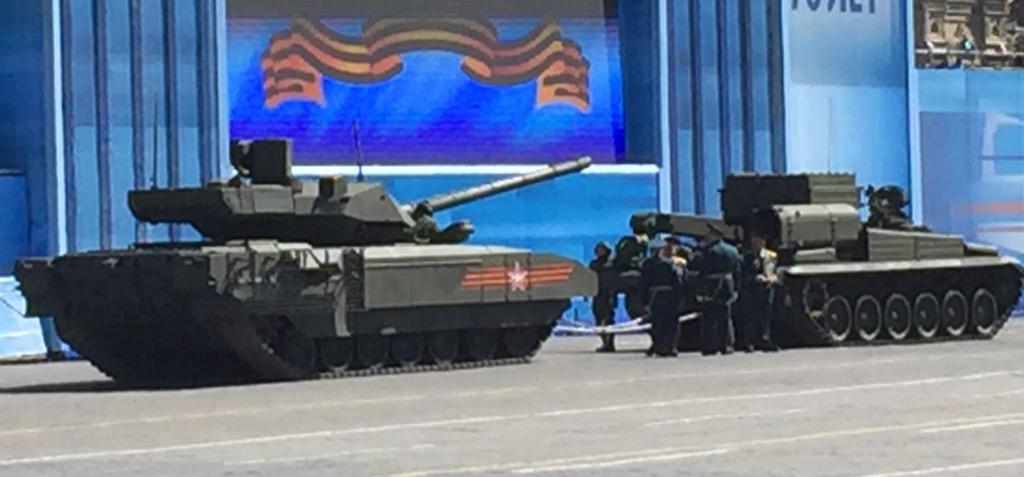
A banner affixed to one of the buildings in the city of Kaluga in anticipation of the V-Day celebrations reads: "Today, it's Crimea, Tomorrow, it's Rome" (Сегодня Крым, завтра - Рим). In Russian Crimea and Rome rhyme nicely, in "I like Ike" sort of way, lending the idea of Russia's invincibility a matter-of-fact air. The airwaves are filled with the same sentiment. The grandiose parade in the Red Square commemorating the seventieth anniversary of the V-Day is meant to supply the Kaluga jingoistic jingle with a visually compelling objective correlative, notwithstanding the new tank breaking down on the parade grounds the other day. But like all myths, the myth of Russia's invincibility, does not stand scrutiny. The actual record is mixed or worse.
      The so-called Mongol-Tatar Yoke hung over neck of Ancient Rus for over 200 years before the hordes were either vanquished or, as evidence suggests, decamped to deal with their own internal problems (1480). During the Time of Troubles 1598-1613), Polish forces, even though eventually chased away, occupied Moscow. After sweeping across Europe, Napoleon was defeated, too, but not before he occupied and burned down Moscow in 1812. Russia lost the Crimean War (1856), lost in the Far East to Japan in 1903-05, and, by all accounts, Russia was a loser in WWI, her defeat overshadowed by and prompting the Russian revolution. Soviet Russia, a.k.a. USSR, lost territory in its war with Poland in 1920, an outcome that stopped the spread of the Bolshevik revolution further West. The war with Finland in 1939 looks more like a pyrrhic victory, if not a defeat, given the Soviet's catastrophically disproportionate losses. The victory in WWII came at the mind-boggling cost in life (16% of the entire population of the victorious USSR, compared to Germany's, the defeated agressor, 12%), not to mention the incalculable treasure, and near-complete devastation of the Soviet territory west of Moscow.
     More recently, in the nuclear age, when wars between major powers became unthinkable, Russia competed with the West in the so-called cold war. The acceptance of the concept of the mutually-assured destruction, made a hot war -- "the last and decisive battle in the words of the International"-- impossible. Because of this, the contest was held in the sphere of "peaceful coexistence," that is, science and technology, third-world proxy wars, and, most important, production and consumption of consumer goods. USSR was sure to win this war, because History, pace Karl Marx and Soviet ideology, was on its side. Nikita Khrushchev took Soviet Marxist gospel at face value, and thought Soviet Union to be the proverbial "gravedigger of History." Sputnik worked its magic., too, and in 1956, eleven years after the V-Day, Khrushchev was bold enough to declare to the country's former allies: "We will bury you!" Soviet economists, anxious to please their boss, projected the post-war growth figures into the not so distant future, showing that the USSR was to "catch up with and overtake the United States" in a couple of decades. Victory was within the reach of a single generation. As we know, the Soviet Union lost that war, too, and not through some battle-field contest or because it lacked tanks or ICBMs, but by imploding from within the unsustainable structure it had itself built. 
      But the foreign engagements aside, there has been another war -- an endless one -- that Russia seems to have been fighting with itself. In the 16th century Ivan the Terrible pretty much exterminated the Russian high nobility, in the process eliminating a check on his autocratic powers and laying waste to the whole country. Following the reforms of Peter the Great, the Russian educated elite fought, mostly with the pen and the printing press, on occasion violently, against the autocratic state, until the autocracy imploded and was bloodlessly overthrown in February 1917. What happened next was a Bolshevik coup d'état, followed by the shattering civil war of 1918-21. A decade later, before the wounds had the time to heal, the Russians resumed their "civil war" during the Stalin collectivization of agriculture and later in the Great Terror, with devastating consequences for the nation. Whatever the exact math, the numbers of victims of Bolshevism and the Nazi Wehmacht appear to be comparable (see, e.g., The Black Book of Communism). But the effect of Stalinism on the nation's moral fibre, its talent pool, its dignity, its political culture, would last for generations. Despite the perestroika, the freedoms the Russians have been enjoying since the collapse of communism, these effects have persisted, witness public attempts to resurrect the cult of Stalin (a bust of Stalin was recently installed in the city of Lipetsk and quickly defaced).
     Fast-forward to August 1991, the Russians, it seemed, won against their Communist party-state, the machine that Stalin built. Yet, with the fits and starts under Yeltsin, Russia's cold civil war proceeded apace, at times spilling into violence, as it did in the anti-Yeltsin revolt in 1993 or the well-publicized government raids on misbehaving oligarchs, or a string of assassinations of political and media figures from Vlad Listyev to Anna Politkovskaja, to, most recently, Boris Nemtsov. Today, it is increasingly clear that the Leviathan of the Russian State (pace Hobbs and Andrey Zvyagintsev's brilliant film) - has gained the upper hand over the opposing voices in Russia's educated society. This "Leviathan" state, flaunting the quasi-divine sanction granted it by the Russian Orthodox Church, wrapped in the flag of the Victory in the Great Patriotic War, now refers to its internal opposition as the "Fifth column" (Vladimir Putin's March 18, 2014, "Crimea Speech"). Resorting to this archetype of war-time rhetoric, President Putin is holding an explicit threat over the heads of the dissenting professional classes, in effect, promising to unleash the "people's wrath" against them, should they continue questioning the legitimacy of what is by all accounts a monumentally corrupt and, even worse, incompetent state. Plenty of resources, unconventional by the old Soviet standards, seem to be available to Russia's long-time president, from the seasoned praetorian guard of the Chechen leader Ahmet Kadyrov that numbers in the thousands to the organized urban toughs, like the Night Wolves Bike club of which President Putin seems to be the honorary member.
      And so the internal cold war between the Russian state and its own Russian educated elite continues unabated, while the "silent majority," whose brain is wired to the state-controlled TV, continues to support the new tsar and grumble at the "national traitors" (национал-предатели - Putin's own, German-inflected coinage from the "Crimea" speech of March 18, 2014).
      How long this chapter in Russia's cold civil war will last and how it will end is an open question. In the meantime, dissenting voices continue to be heard, even as Putin's trick war with Ukraine has unleashed forces so dark that the Russian Leviathan, puffed up as it is, may be too fragile to handle.

Berkeley-Paris, January-May 2015


Friday, May 8, 2015

Бабель и Багрицкий, или буква "Б" для моей будущей Азбуки

Несколько месяцев назад случайно попалась фотография листочка рукописи Исаака Бабеля из одесского Литмузея (спасибо Андрею Устинову за публикацию в FB). Я сразу не узнал, что это, и по привычке принялся за расшифровку. Получилось:

<Багрицкий>, который пахнет как скумбрия, только что изжаренная моей матерью на подсолнечном масле. Он пахнет как уха из бычков, которую на прибрежном ароматическом песку варят мало-фонтанские рыбаки варят в двенадцатом часу июльского неудержимого дня. Багрицкий полон пурпурной влаги, как арбуз, который когда-то в юности мы разбивали с ним о причалы <тумбы> в Практической гавани у пароходов, поставленных на близкую Александрийскую линию.
Колычев и Гребнев <…>

Я тогда понял: это известный текст -- кусочек из того, что с 1962 г. печатается под заглавием “В Одесса каждый юноша”. Зачитанная и завизированная часть истории "одесского" извода русской (советской) литературы.

А вот автограф позволил прочитать заново. Бросилась в глаза бабелевская характеристика
Багрицкого, который возникает из запаха “скумбрии, только что изжаренной моей матерью на подсолнечном масле” -- такая вот картинка из еврейского быта, из которого, как джинн из бутылки выдымливается Багрицкий.

Слова Бабеля напрашиваются на сопоставление с “Происхождением” Багрицкого (1930), полными, как известно, презрением к еврейской бытовухе. Мать там подается через признак ее отвратительного "чепца":

<...> И детство шло.
Его опресноками иссушали.
Его свечой пытались обмануть.
К нему в упор придвинули скрижали —
Врата, которые не распахнуть.
Еврейские павлины на обивке,
Еврейские скисающие сливки,
Костыль отца и матери чепец <...>

Ну, а еврейская любовь для него знаменательна отсутствием эротизма:

<...> Любовь?
Но съеденные вшами косы;
Ключица, выпирающая косо;
Прыщи; обмазанный селедкой рот
Да шеи лошадиный поворот.

У Бабеля же, напротив, едкая вонь материнской кухни (кто не помнит запаха рыбы на подсолнечном масле!) спокойно переливается в нееврейский рыбацкий быт с ухой из бычков, поспевающей на раскаленном песке, с обычаями портовой шпаны, утоляющей жажду погружением всей морды в расколотый о тумбу арбуз.

Вероятно, Бабель, успевший пожить в респектабельной квартире на углу Жуковской и Ришельевской, сумел остраниться от своей буржуазной Одессы -- "ушел в люди", как ему советовал Горький -- и Одесса заиграла у него таким вот раблезианским сказочным градом Китежем, как в его ранних "Одесских рассказах". А Багрицкий, как ни парадоксально, так и не сумел отдалиться от утробного мира. Он и после переезда в Москву продолжал воевать со своим "происхождением" из убогих одесских евреев-мещан.

Бабель любил Багрицкого, они дружили, быть может, и правда, что их "волновали одни страсти", как Бабель писал в своих воспоминаниях об ушедшем друге...

После похорон Багрицкого, по воспоминаниям очевидца (Борис Борисович Скуратов), Бабель качал головой и говорил: "Ничего не вышло." Мы не знаем, что Бабель хотел этим сказать. Но я полагаю, что он не имел ввиду карьеру Багрицкого. Она-то получилась: на него был спрос, и несмотря на все послевоенное юдофобство, он вошел в программу и в учебники. Скорее, Бабель мог иметь ввиду другие горизонты: "не получилось" у Багрицкого -- "взять Москву," как он прочил своим землякам-одесситам, то есть, войти в большую литературу с новым виденье мира.

А у Бабеля получилось.


Париж. 8 мая 2015 г.

Культурный капитал


Проходил опять мимо Hôtel de Ville. Там на изгороди статуи, аллегории наук и искусств. Меня привлекли две обнаженные: одна - художница, другая - геометр (держит циркуль). И тут я понял, что Верлен имел ввиду, когда писал в "Art poétique," что поэзия это, где l'indécis et précis se joint. Искусство и наука. И обе воплощены обнаженными такими Венерами милосскими!

Легко было Верлену! Выходишь, смотришь - все готово!  А Анненскому на то, чтобы то же самое сказать, потребовалось целое четверостишие:

В раздельной четкости лучей
И в чадной слитности видений
Всегда над нами власть вещей
С ее триадой измерений...

Вот что значит культурный капитал!

Friday, August 8, 2014

AUGUST MEDITATIONS: POOR RUSSIA, OR PUTIN’S COMPLAINT


Poor Russia! Look how Russia has been humiliated by the West when NATO expanded to include its erstwhile Warsaw Pact allies and its former Baltic possessions, not to mention the promise to bring Ukraine into the EU, thereby threatening the 1500 mile-long border Russia shares with Ukraine. Isn’t Russia vulnerable enough already! Besides, shouldn’t a former empire – 63% of Russians believe Russia is a “great power” – be  able to exercise its influence over the territory it used to control while an empire? How can the Americans and the Europeans be so callous with such a peace-loving, cooperative, exceedingly friendly – and great – nation? How could Russia not feel vulnerable and threatened by the rich and powerful West? Doesn't the West understand that Russia has been on its knees far too long and now must rise again? Besides, who can take Ukraine seriously as an independent state, especially with a third of its population speaking Russian?

These are, in a nutshell, the sentiments of those both outside and inside Russia who advocate humoring Vladimir Putin with regard to Ukraine. For home consumption, the Kremlin and its media toss out to red meat about the Nazi takeover of Ukraine and, in the words of the Speaker of the State Duma, Sergei Naryshkin, “the genocide of the Russian people” there.[1] The campaign for the dehumanization of the Ukrainians (“fascists,” “Nazis”) has been going on for months, including the WWI-style favorite propaganda myth of the Ukrainian soldiers crucifying a Russian child in Slaviansk. The report appeared on Channel 1 on July 12 and is still there:  http://www.1tv.ru/news/world/262978.

Much of this rhetoric is predicated on the alleged deep, unbridgeable antagonism between Russia and the West. But first of all, Russia v. the West is a false dichotomy and Russia v. the EU, even more so. None of the EU member nations, separately or together, are interested in territorial expansion into Eurasia, nor NATO whose primary function has been to guarantee Europe’s post-WWII borders, nor its leading member, the United States. Putin himself has repeatedly proclaimed Russia to be a European power and seemed committed to this 300-year-old vision until he began to pivot towards Russian nationalism in the wake of the US invasion of Iraq. Still, the ambiguity persisted with profound political and economic implications. The difficulties the EU has been having with the sanctions in response to Russia’s annexation of Crimea shows the high degree of Russia's integration into the web of the EU economic and cultural relations. Visa-free travel for Russians to the EU was about to be negotiated when the Crimea debacle put everything on hold. Indeed, by historical reckoning, Russia's integration into the West since the fall of communism has been truly fast-track and, as it appeared, perhaps, a little too fast-track for the EU, given its long hesitation in responding to Russia’s blunt aggression in Ukraine.  

But what about the issue of NATO expansion? When I was in Moscow in June, a die-hard Putin opponent told me he was sure that US and/or NATO had been planning to establish a military base in the Crimea and Russia’s take-over of the peninsula was meant to prevent it. I did my research. Apparently, the US requested a few years ago to be integrated into the old Soviet early warning system for missile defense against Iranian ballistic missiles. It is this request that has been morphed by the Russian propaganda machine into a menacing American plan to establish a military base on the Crimean peninsula. I have no doubt that a satisfactory arrangement could have been reached to allay Russia’s fears that the anti-missile defense system, still in the works, targeted at Iran, was “dual-use” and could have been pointed at Russia.

But what about the more general argument that seems intuitively right: Shouldn’t Russia feel legitimately threatened, as it is surrounded by NATO members? Seen from the United States (except through Sarah Palin’s windows), Russia may not loom too large (compare the 2013 US military budget of $640 billion to Russia’s $88 billion); however, seen from Western Europe, Russia’s might is far more menacing (Russia spends about twice as much on the military as do France, the UK, or Germany). Russia, in fact, is the unrivalled European superpower in the military, nuclear, and, increasingly important, the hydro-carbon sense. Such a high-profile military posture is pretty hard to maintain while standing on one’s knees. Furthermore, let us not forget that for half a century following WWII, when the Russians – or, rather, their leaders – held their heads high (under Stalin, Khrushchev, Brezhnev, Andropov, Chernenko), Russia’s legal antecedent, the USSR, oppressed its citizens and turned the countries of East-Central Europe into de-facto colonies. Who can, then, blame Poland, Hungary, Romania, Czechoslovakia, as well as the Baltic states that had been occupied by the Soviets under the Molotov-Ribbentrop Pact of 1939, for scrambling to assert their national sovereignty at the first historical opportunity and securing their statehood by joining NATO and the EU? Is there any rational reason for Russia to think that these nations are poised to start nibbling at Russia’s territory?

That there is no NATO threat to Russia should have become obvious even to the most thick-headed analyst in the wake of the Georgia War of August 2008. Resulting in loss of territory for Georgia, this conflict demonstrated that no outside power had the inclination (some say the ability) to challenge Russia in Russia’s own back yard, Senator McCain’s hollow saber rattling notwithstanding. In fact, the opposite argument has been legitimately made: the West’s demure reaction to Russia’s shenanigans in Georgia was realistic -- and a singular factor in Putin’s calculation when he decided to move into Crimea.  Today, according to NATO’s internal documents, disclosed in Der Spiegel on 19 May 2014, NATO lacks the ability to defend its members among the Baltic states, should Russia choose to invade them (http://www.spiegel.de/international/germany/ukraine-crisis-shows-up-cracks-in-nato-a-970248.html).
  
The threat to Russia from the West, then, is literally a travesty: the reverse is true, if one understands “the West” as a stable political order that has governed European borders since WWII and, by mutual consent, since the collapse of communism. The "threat from the West" is nothing but a propaganda myth, a dusted-off  old Soviet saw about "capitalist encirclement" and the looming external enemy. In the late 1980s and early 1990s, Mikhail Gorbachev, Edward Shervadnadze and Alexander Yakovlev did a lot to demystify it but, apparently, not enough.

Now, as under communism, this propaganda assault on the people, amplified by the craven, state-controlled Russian media (with very few digital media exceptions) is meant to shore up the legitimacy of the political class and its leader, who have proven incapable of setting their country on a course that would diminish its monumental corruption and narcotic dependency on the export of hydro-carbons. As a result, Putin and his United Russia Party, the political machine he jerry-rigged from the rubble of the Soviet one-party national-security state, are feeling vulnerable. The world has changed, and Russia’s new cosmopolitan elite, the so-called creative class, that has arisen since the collapse of the Soviet Union and has established itself economically in the prosperous oil-rich Russia, instinctively resists Putin’s authoritarian and increasingly ineffective rule. One common denominator of their protests was their sense humiliation at the corrupt political process, a violation of their citizenship. After their protest demonstrations of 2011 and 2012, Putin turned away from this natural constituency for a modernizing leader, instead embracing the nationalism of the “silent majority” – populist, socially conservative, sanctimonious, and not infrequently chauvinistic. This must have been a desperate move on the part of the man who had previously condemned Russian chauvinism as a dangerous force that might lead to the break-up of the multi-ethnic and multi-confessional Russian Federation. A student of history, Putin has to be aware that the Russian empire of the Romanovs fell, in part, because of the autocracy’s embrace of exclusive Russian nationalism. Is today's Russia next?

No need, then, to feel sorry for Russia or the Russians as victims of the powerful West. Rather, as throughout much of Russia’s history, Russians continue to be the victims – surely undeservedly – of their own government. True, there are many Russians, affected by the imperial visions of the Kremlin propaganda machine, who have been assiduously imagining themselves standing on their knees under the diktat of the evil West. Even under the best conditions of partnership, according to some of them, the West has treated Russia as a second-class citizen in the world community. This is what Tony Blair picked up during his friendship with Putin in the early 2000s: “Vladimir later came to believe that the Americans did not give him his due place (my italics, GF). Worse, he saw them circling Russia with Western-supporting 'democracies' who were going to be hostile to Russian interests.”[2] In a recent interview, Putin’s crony, billionaire Timchenko, echoed such sentiments and declared that his Western business partners had always treated him as “second league.” Complaints such as these, needless to say, involve what Max Weber called “the prestige of great powers,” ever hungry for self-aggrandizement and extra recognition, not the dignity of individual citizens. The former must have the pyramids and the most fearsome weapons; the latter, property and respect.


Few will deny that the average middle-class Russian has been enjoying the best standard of living in all of Russia's history, replete with vacations abroad, separate apartments, country dachas, and late-model German, French, and Japanese automobiles. Aleksander Yakovlev used to say that Soviet citizens could not feel free because they did not own any property, for him the necessary condition of freedom. By this token, many of his compatriots may feel free these days and indeed they do hold their heads high. For years now, my undergraduate students at Stanford who havd gone to Moscow to study alongside their Russian counterparts have complained that they felt a bit diminished by their colleagues’ off-campus spending habits. Yes, these are elite students, but I also remember my Stanford undergraduates traveling to study in Russia in the 1980s and telling me how shocked they were by the limited horizons and economic insecurity of their Russian counterparts. The 1980s are long gone! In my seven days of pounding the pavement in Moscow (after a twelve-year absence), I was able to spot only one Russian Zhiguli sedan, the most ubiquitous vehicle in Moscow circa 2002, but I noticed that Bentley has a  dealership in the, yes, Revolution Square next to the Kremlin (in case you are wondering, you can get one, slightly used, for just half a million dollars). Luxury cars aside, as individuals, middle-class Russians feel as proud and dignified as at any time since 1917, whatever their politics. It is the political class that runs the country and its leader Putin, a deeply corrupt regime, presiding over a profoundly corrupt bureaucracy, who feel the need to buck up their sagging prestige with a “little victorious war” while conjuring up the spectre of the big bad US and NATO and the “fascist” Ukraine. 

Surely, there may be an occasional clash of interests over this or that tariff or import/export issues, but there has not been a fundamental antagonism between Russia and its Western partners. Quite the opposite. The new, post–Communist Russia was embraced by the West, cautiously, to be sure, but embraced nonetheless, as well as aided considerably by governments and NGOs as it struggled with the transition from Communism. It was the United States, to use just one example, that was the strongest supporter of Russia’s entry into the World Trade Organization.

The benign international climate, perhaps, the most benign in all of Russia’s history, the absence of actual military threat from the West or elsewhere, and Russia’s deep integration into the EU seem to have been taken by Putin’s government for granted while Russia had a free hand in preventing a newly independent nation from electing the government it likes and the form of economic modernization it chooses. This is what happened in Ukraine (and before it, in Georgia). By some accounts, Putin's decision to annex Crimea was an intemperate reaction to the sudden resignation of Ukraine’s president after months and months of popular protests against him. A sly tactical move taking advantage of Ukraine’s weak care-taker government, the annexation of Crimea was strategically an irrational act: it produced the opposite effect of anything one could wish for one’s own country – it diminished rather than enhanced Russia’s security by turning the world’s most powerful nations, economically and militarily, against Russia. But above all, it united  against Putin the politically and ethically diverse, as well as historically fractious, Ukraine and forced the EU states, ever a quarrelsome lot, to step back and agree, at last, on some concerted action to raise the stakes for Putin in his “big game” and to force him to reconsider his policies. After all, who wants a super-power bully in the EU's own back yard, a bully on the scale of a Stalin or a Hitler? With Western support for Ukraine now assured, Putin's adventure is liable to result in continuing turmoil on Russia’s borders that Putin himself may not be able to control – and a substantial strengthening of NATO’s Eastern and Northern borders. Poland used to have about a dozen US soldiers stationed on its soil prior to the annexation of Crimea. There are now about 500 US and NATO troops there and more are coming.

The analogy with Hitler's Germany and the 1930s has been surfacing repeatedly since the annexation of Crimea (first made on 1 March 2014 by Professor Andrei Zubov of the prestigious Moscow Institute of International Relations). Well, similarities stare us in the face. The Germans, some Germans, did feel sorry for themselves. To paraphrase the rhetoric of the day: Oh poor Germans! The Treaty of Versailles brought our proud nation to its knees! And now Germans must rise! Hitler saw to it. Germany got up and raised its head. This rising from the knees began in March 1936 with the re-militarization of the Rhineland in direct violation of the treaties of Versailles and Locarno. Putin’s annexation of Crimea invites itself as an analogy: he violated the solemn agreement made by Russia, Great Britain, and the United States with Ukraine which agreed to get rid of its nuclear weapons in exchange for the affirmation of the inviolability of its present borders (The Budapest Memorandum of December 1994). Back in 1936, no significant reaction followed from the international community, except for phony outrage while Hitler’s action merited an iron-fisted push-back. This was appeasement Act 1. Two years later, Hitler swallowed Austria. No reaction followed. That was appeasement Act 2. The analogy today would be the take-over of Eastern Ukraine by the Russian-sponsored irregulars, who have their sights set on a still larger chunk, the entire “Novorossia,” including Odessa. Act 3 was, of course, the Munich Agreement and the resulting fall of Czechoslovakia – the archetypal appeasement. Here we must gasp at the analogy: the Munich moment was followed by WWII; further appeasement of Putin raises the spectre of WIII.

To be sure, analogies are imprecise, which is why they are analogies, not equivalences. Putin is no Hitler. In Putin's case, what seems to be driving his expansionist agenda is not so much the wounded pride of the son of a former Great Empire (there is that, too, and yes, it hurts), but his fear for his own position as a head of state with his apparent aspirations for a life-time tenure. Back in 2011-12, when he realized in the wake of the shamelessly rigged parliamentary elections that he no longer enjoyed political support among the professional and cultural elite of the capitals (the cosmopolitans), he turned to the anti-cosmopolitan silent majority. Members of this constituency are far easier to convince of the just causes for their resentments (xenophobia, ethnic prejudice), as they have been sidelined during Russia's most recent spurt of modernization (a common enough phenomenon in the age of globalization and all too familiar to us in the United States – just watch Fox News). Putin spoke to them in language they could well understand, ratcheting up the rhetoric of incitement: first, the persecution of Pussy Riot, then the jailing of the demonstrators in the 2011 and 2012 protest rallies, and now the crescendo proclaiming Ukraine a nest of fascists.

Of course, if you happen to run into Putin in your neighborhood bar and ask him, why, Vladimir, why did you do it? He would say he was afraid, no, not for himself, but for Russia, lest it disintegrate in a political free-for-all, and for that reason and it alone, he had to tighten the screws and start the little bloody war. But motivations, ultimately, are beside the point. A nationalist bully is a nationalist bully - whether because of the “stolen victory” in the Great War (Hitler’s well-known beef) or the insufficient magnanimity on the part of the Cold War victors (Putin’s whine). For unless a bully is stopped right away, his appetite will grow as it feeds on appeasement. To wit, unless Putin is stopped through diplomacy and other forms of soft power, including sanctions, we – meaning all of us here and in Russia -- will soon be staring into the new guns of August, and this is not a prospect that any of us will enjoy.

August 7, 2014
Berkeley-Stanford


[1] Naryshkin’s speech in Belgrade on 5 May of this year.
[2] Tony Blair, A Journey: My Political Life (Knopf Vintage Canada: Toronto, 2010).

Tuesday, May 20, 2014

The Kitchen Sisters and I


Some time a year a go, I received a call from Davia Nelson, one of the famous Kitchen Sisters, whom I had met earlier while having drinks with our mutual friend Tom Luddy (yes, at Chez Panisse, of course). Davia wanted to do a whole program on the Soviet Kitchen, especially the Soviet kitchen as the locus of civil society in the late Soviet Union. I have heard their features before, and I loved them but it never occurred to me that something this colorful could be done with my "native realm."
Although I like cooking and at a certain point in my life spent quite a bit of time learning Chinese and French cuisine, I had never thought about the kitchen and food as a significant subject in Soviet history, even Soviet cultural history. A good conversation piece, a cute object of the ambivalent Soviet nostalgia, a subject for jokes, perhaps even a shibboleth for the Soviet cognoscenti, but an object of serious study? Well, I scratched the surface and saw -- gold! I realized that my own and at the time inexplicable obsession with learning to cook Chinese, French and Italian dishes had to do with my deep desire to create a distance between  my Soviet past and myself.

Yes, my wife was an American, a New Yorker, I had been living in the US since the fall of 1971 and have been an American since 1974, went to Cal, taught at Stanford since 1977, and yet I now realize that my migration had not been complete without a retreading, so to speak, of my alimentary tract with the tastes, flavors, and textures of non-Soviet cooking. I emphasize Soviet because I love Russian food -- caviar, lox, herring, various salads, bliny, milk products, pickled mushroom, cabbage, apples, and its Georgian/Armenian/Azeri iterations of the Middle-Eastern and Mediterranean dishes.

To make a long story short, I started reading up on the history of Soviet food since 1917 and the origins of ОБЩЕПИТ (Communal Food Industry). A whole new angle of the Russian experience began to come into view: what happened after the whole way of life was destroyed in the 1917 revolution and the civil war that followed, what replaced the tavern (кабак, трактир), the diner, the restaurant, how the kitchen evolved, how the scientific Soviet "diets" emerged, and how everything changed once again with the Stalin revolution of 1929 when all private and semiprivate little shops and eateries were shut down practically overnight, and the country moved toward the centralized industrial, American-style food production. It was so interesting that I started writing up on the subject.

Before long, Davia dropped by, and we spent a couple of hours talking about food and Soviet and Russian history and how it offered a fascinating view, but also the feel of what Soviet life was like. She had her tape recorder on. A year later, we got together for breakfast of lox and bagels (no bagels but the "crackles" from the Cheese Board Collective in Berkeley) and listened to the incredible feature on the communal kitchens in the Soviet Union that she and her "kitchen sister" Nikki Silver produced. Three cheers for the Kitchen Sisters!

Next week the NPR Morning Edition will be running a follow–up feature, "The Dissident Kitchens," that I very much look forward to. In the meantime, you can hear the fabulous "Communal Kitchens" at this NPR URL:
http://www.npr.org/blogs/thesalt/2014/05/20/314054405/how-russias-shared-kitchens-helped-shape-soviet-politics

"Dissident Kitchens" broadcast of May 27 is here:
http://www.npr.org/blogs/thesalt/2014/05/27/314961287/how-soviet-kitchens-became-hotbeds-of-dissent-and-culture


20 and 27 May 2014
Berkeley

Thursday, April 24, 2014

LEO TOLSTOY, MAX WEBER, LOVE, AND WAR (Introduction to a Podcast)

Entitled Opinions (About Life and Literature) has just released a podcast of my conversation with Robert Harrison about Tolstoy and Max Weber. These two names - one, perhaps the greatest novelist of the nineteenth century, the other, the father of modern sociology - rarely appear in one sentence. They should.

During the winter quarter, I taught a seminar at Stanford called "Tolstoy's Anna Karenina and Social Thought of Its Time." We look at Tolstoy great, perhaps, the greatest novel as a kind of an upside-down Noah's Ark transporting us from the optimistic shores of nineteenth century onto the shores of the twentieth - the age shrouded in grand illusions but serving up wars, revolutions, the gulags, the holocausts, as well as the prospect of total annihilation of humanity... Yes, I sigh, stay tuned...

Like all great works, Tolstoy's was in dialogue with his contemporary master thinkers, and I structured the course in such a way that after immersing ourselves in the novel for three weeks, after following all the love and the heart break, the ball rooms and the salons, the barn yard and the races, the meadows and the railroad tracks, after figuring out how Tolstoy could produce a hybrid of Jane Austen and Gustav Flaubert, after grasping the effect that the Crimean War and the Great Reforms had on Russia, we could start re-reading the novel yet again.

Week after week, we paused over a section to catch the echoes of Plato (on love), Freud (on dreams and the unconscious), Marx (political economy), John Stuart Mill (women's emancipation), Nietzsche (ethics, truth, and power), Emile Durkheim (community and religion) and, as a culmination, the response of a thinker who was one of the keenest readers of Tolstoy and one who put together systematically all of the above aspects of the modern condition - Max Weber.

Weber knew Russian (he learned it to follow the events of the Russian 1905 revolution). He even thought that if a new world religion were to arise in the modern world (a small chance), it would most likely happen in Russia. In part, this was due to Russia's unfinished, hybrid modernization, combining extremes of traditionalism and modernity, stemming from  Russia's separation from the rationalism of Western Christianity transformed by Protestantism and Counter-Reformation that Russia had not experienced. No doubt, his reading of Dostoevsky and Tolstoy had a lot to do with this conclusion as well.

But I believe that it must have been the sociological sophistication of Tolstoy's genius, that drew him ever deeper into Tolstoy's art. Weber was captivated by Tolstoy, and he spoke about this to his students after the end of the Great War in a public address that we know as "Scholarship as a Vocation" (parts of it were "recycled" from the seminal 1916 essay “Religious Rejection of the World and Their Directions,” aka Reflections on Stages and Directions of Religious Rejection of the World). In "Scholarship as a Vocation," the address the father of sociology was offering the younger generation, he concedes that social science cannot find an adequate answer to Tolstoy's killer question "what is a good life," even though, it is "the most important question for sociology." However, what social science can do instead, is to "help sort it all out." For the final two weeks of the seminar, we let Max Weber guide us, as we attempted to sort out Tolstoy's conundrum.

What, then, is a good life? Tolstoy thought he had figured it out. As we know, in the course of writing Anna Karenina, Tolstoy underwent a conversion, and the novel, written over four years, served him during this time as a kind of a diary. Especially the last part of Anna Karenina, Book Eight, resonates with what Tolstoy understood as his new understanding of life following his "conversion" - a turn to what came to be known as Tolstoyanism, or in Russian, tolstovstvo. Filled with new insight and donning the mantle of a prophet, the author of Anna Karenina felt inspired to re-write, not just the ending of his novel, but the New Testament! His new Gospel (and he referred to it as "my Gospel") affirmed without compromise a distilled, rationalized Christian ethic of love (love thy neighbor as you would yourself, turn the other cheek); what it denounced was the modern civilization, in particular, the modern state and society that he saw as vehicles for spreading desire, carnality, and violence, be it under the guise of the cult of romance, the veneration of the arts, emancipation or women, general progress, nationalism, communism, capitalism, or other modern ideology.

This is why the main emphasis in Anna Karenina falls on a vehicle - the locomotive. Generally, it serves as a key symbol, the metaphor and the allegory for, progress. Tolstoy inverted it, making it a symbol and an allegory for the perdition awaiting human beings on the path of modernity.  The novel's love story, by comparison, the tragic romance of Anna and Vronsky, as the reader must realize, is nothing but a honey trap meant to deliver the lovers to modern hell. As inevitably as carnal love fades away and disappears altogether in the novel, its other side - aggression, violence and war - comes to the fore. Freud's "Civilization and Its Discontents" comes to mind. But Weber's thought, too, resonates with Tolstoy's, and so at a deeper level. "The more sublimated it is," Weber wrote about the erotic passion of the modern sophisticated sort, "the more brutal" it is. And before you stop to catch your breath, Weber goes on to define erotic love as "the most intimate coercion of the soul of the less brutal partner."

According to Marian Weber's biography of her late husband, Weber was planning a book on Tolstoy, and I believe that his famous 1916 long essay ("Zwischenbetrachungen" or "Reflections") may have been, apart from other things, a sketching out of his own dialogue with the prophet and last author of Anna Karenina. His several men references to Tolstoy's work, the essay's structure, and its very title  - Reflections on Stages and Directions of Religious Rejection of the World - compel us to read Tolstoy and Weber together.

My friend and Stanford colleague Professor Robert Harrison, who has been running Stanford's radio show, has been asking me to do a show on Tolstoy for a few years now. Over the last few years, we've had coffees and lunches and talked about the subject. Finally, the stars aligned perfectly: I had just finished the course, Robert had an opening in his schedule. We pounced. You can now hear this conversation as a podcast on the the Entitled Opinions site: GrishaFreidin on Leo Tolstoy

My deep gratitude to Robert Harrison. I am proud and honored to be among his interlocutors.

24 April 2014
Berkeley

PS. He and I also did a show on Isaac Babel that you can listen to here:
Professor Gregory Freidin on Isaac Babel